
Full Translation
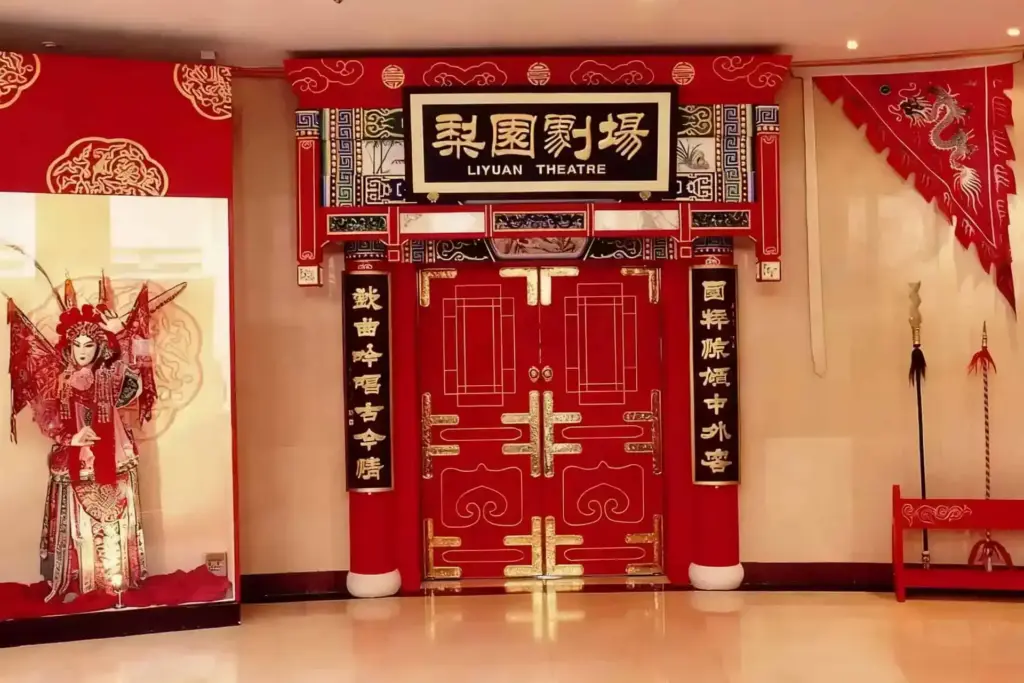
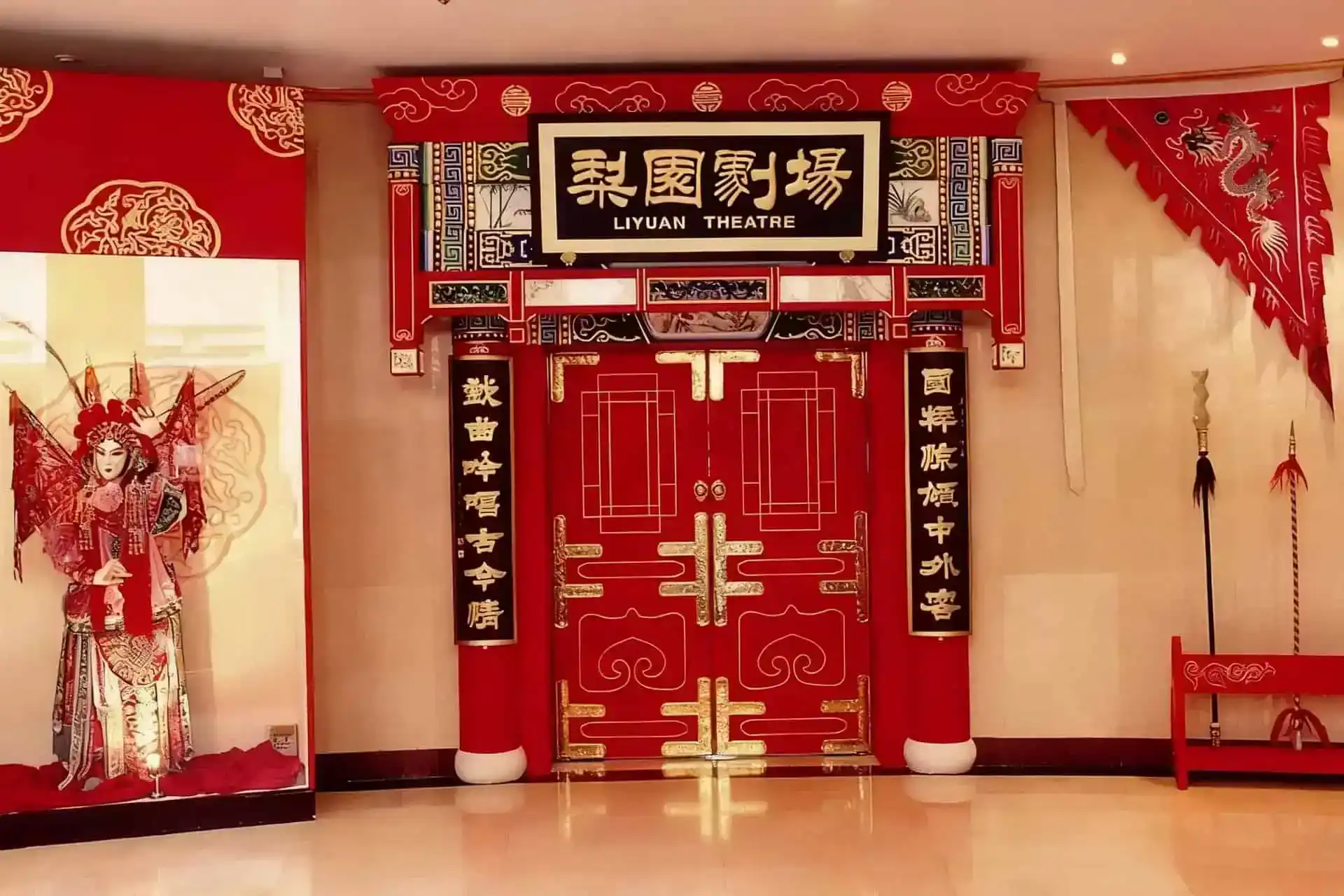
Liyuan Theatre, located inside Qianmen Hotel at Hufangqiao, Xicheng District, Beijing, is the city’s first tea-house-style art venue jointly established by Beijing Qianmen Hotel and Beijing Peking Opera Theatre in 1990. It has won the Beijing Tourism “Forbidden City Cup” award for “Best Evening Activity Venue” for seven consecutive years, showcasing its unique charm.
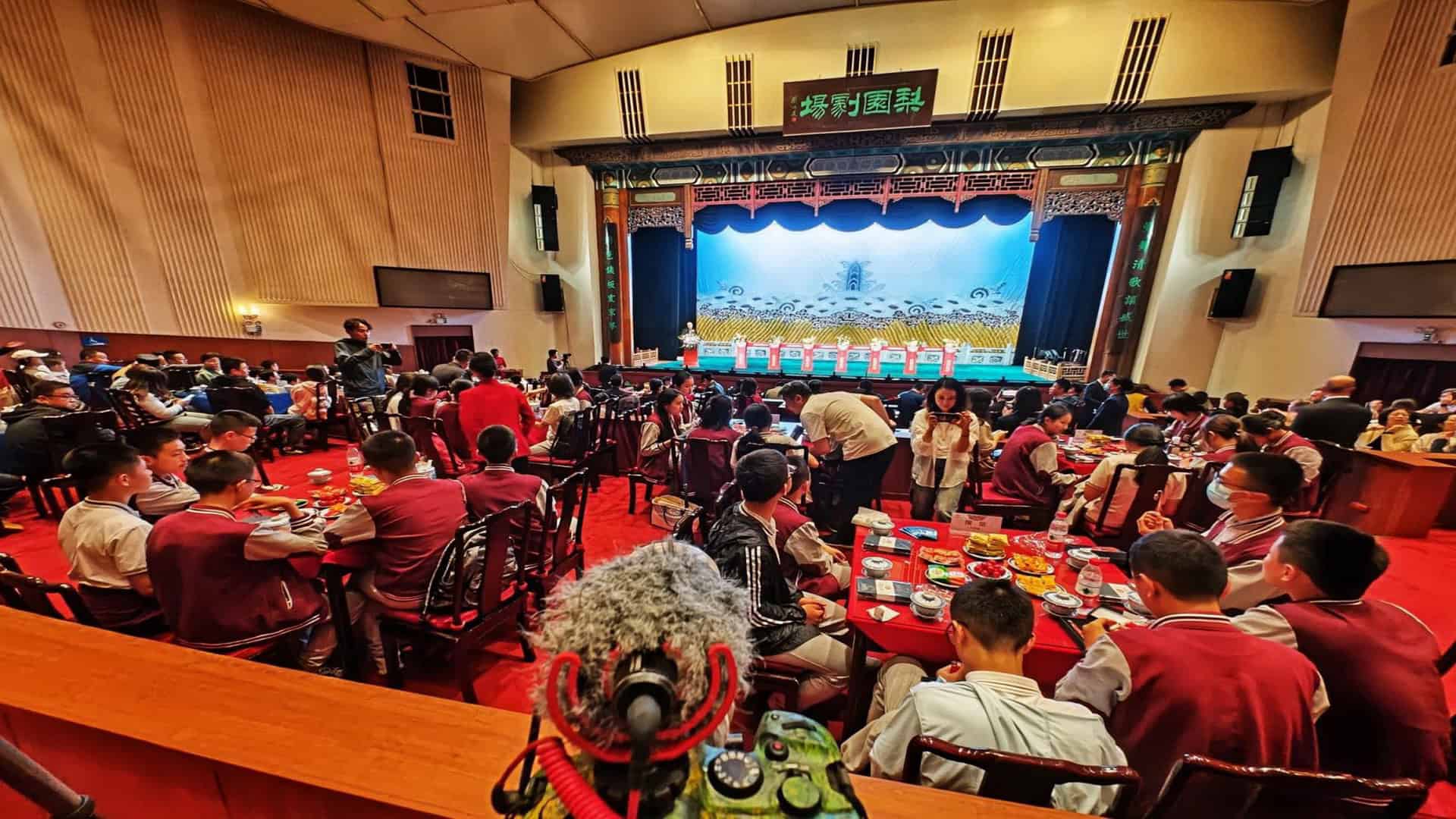
The Theatre consists of three sections: the performance hall, the exhibition hall, and the sales hall. The performance hall is the core, with a stage that is 8 meters high, 12 meters wide, and 7 meters deep. On both sides hang couplets written by Weng Ouhong and calligraphed by Liu Bingsen, exuding the essence of Peking opera. The audience area is decorated with eight large Peking opera facial masks and colorfully painted screens featuring characters from 14 different plays. It offers 800 seats across three ticketing sections, allowing the audience to enjoy authentic Beijing snacks and fine teas while appreciating the performances.
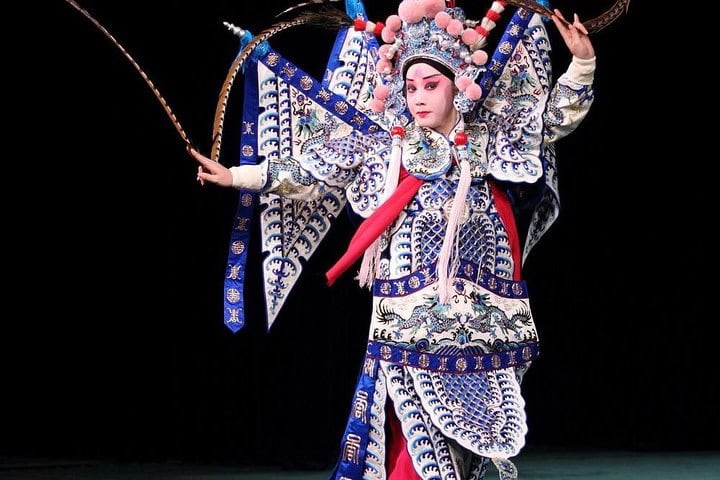
The exhibition hall provides a detailed display of the over-200-year history and evolution of Peking opera art, while the sales hall is a paradise for Peking opera enthusiasts, where they can purchase Peking opera crafts and souvenirs, and even dress in opera costumes and have their faces painted to create unique mementos. The Theatre’s audience is diverse, primarily consisting of foreign tourists. Performances mainly feature opera excerpts, with electronic screens displaying lyrics in both Chinese and English, enabling international visitors to appreciate the art without barriers.
The stage design of Liyuan Theatre is elegantly antique, and the auditorium is tastefully decorated, creating a strong Peking opera atmosphere. The front seating area features Ming-style furniture, while the rear and second floor are equipped with row seating. Tea and fruit are provided, creating a comfortable viewing environment for the audience. This is not only a temple of art but also a bridge for cultural exchange. Various national leaders and celebrities, such as former South Korean President Kim Dae-jung and former Japanese Prime Minister Toshiki Kaifu, have visited this venue.
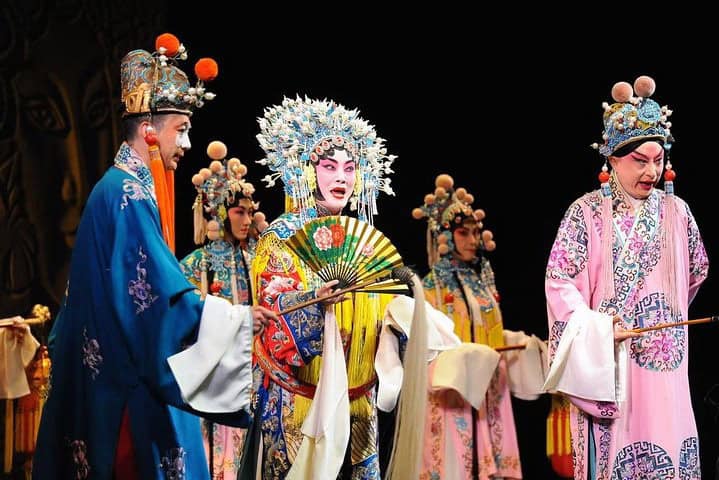
As an important landmark of Beijing tourism, Liyuan Theatre attracts millions of visitors each year, serving as a significant showcase for traditional Chinese culture. As the earliest Theatre in China to host year-round Peking opera performances with a capacity of over a thousand people, Liyuan Theatre has earned widespread acclaim from both domestic and international audiences through its unique operations and rich repertoire. Whether local or visiting, everyone who comes here feels as if they are immersed in a fusion of history and culture, enjoying a feast for the senses.
Theatre Introduction
Liyuan Theatre is located inside Qianmen Hotel at Hufangqiao, Xuanwu District, Beijing. It was jointly established by Beijing Peking Opera Theatre and Qianmen Hotel and opened in October 1990, focusing primarily on opera performances. The Theatre comprises three sections: the performance hall, the exhibition hall, and the sales hall. The performance hall consists of the stage and audience area. The stage is 8 meters high, 12 meters wide, and 7 meters deep, with couplets on both sides written by dramatist Weng Ouhong and calligraphed by Liu Bingsen. The audience area is decorated with eight large Peking opera facial masks and colorfully painted screens featuring characters from 14 different plays, with 800 seats across three ticketing sections. Similar to traditional old opera houses, the audience can enjoy various Beijing snacks and fine teas while watching the performances. The exhibition hall features an exhibit on the over-200-year development history of Peking opera art.
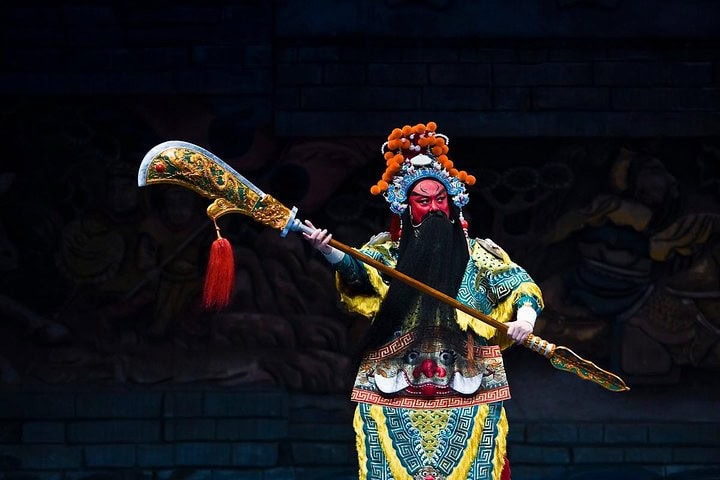
Classic Repertoire
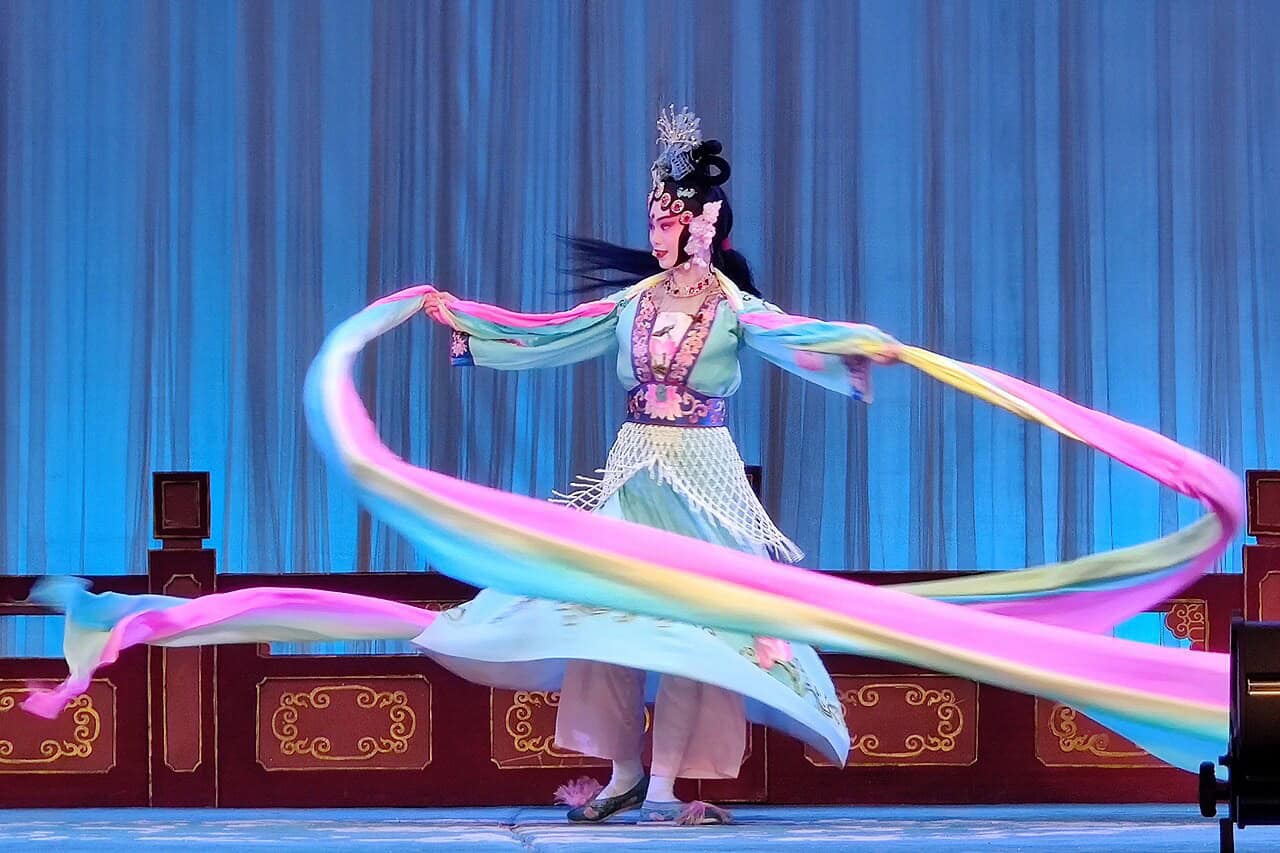
Heavenly Maiden Scattering Flowers
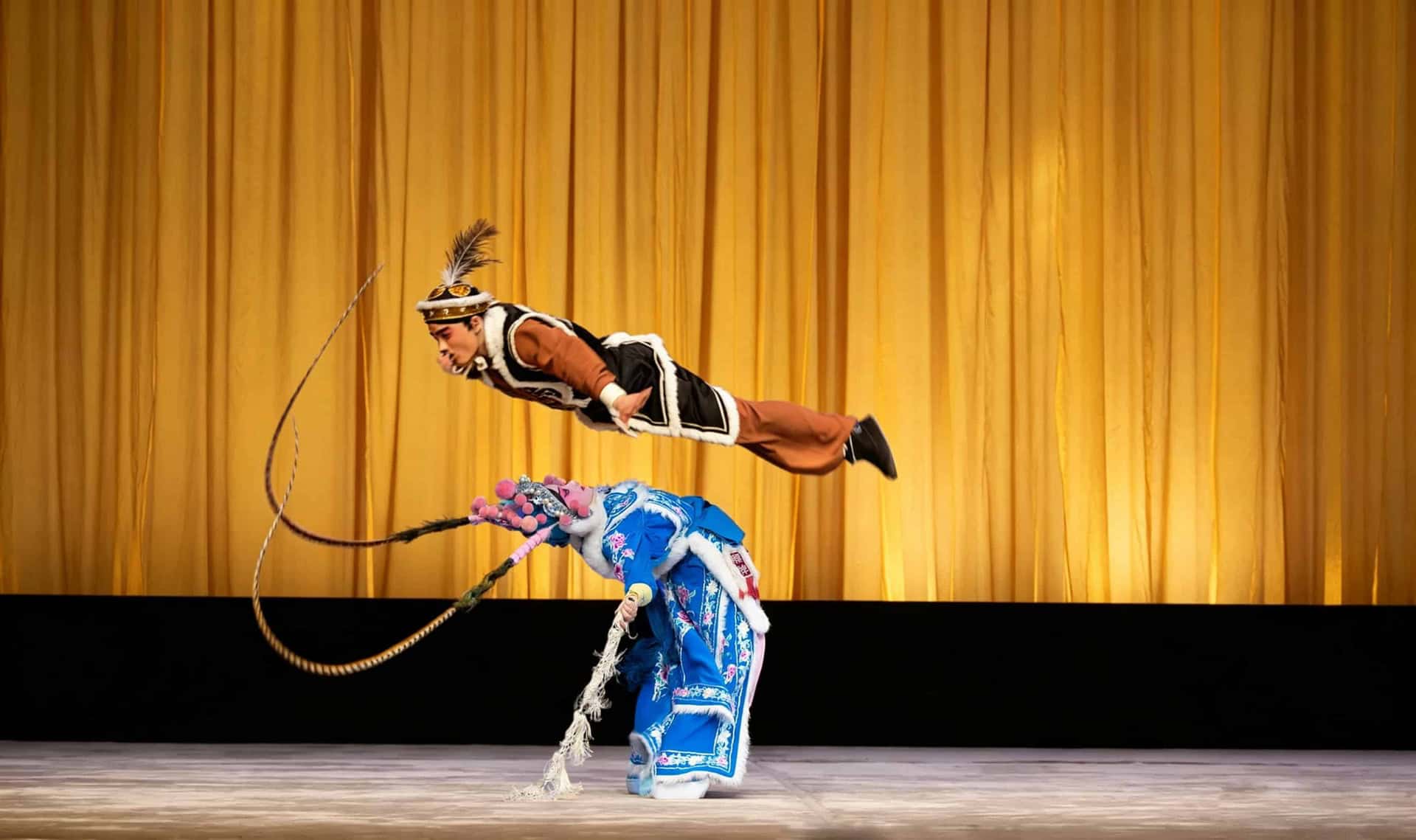
A beautiful and holy heavenly maiden, commanded by the Buddha Sakyamuni, descends upon the mortal world carrying blessings and good fortune, scattering colorful flower petals across the earth. What is truly breathtaking is not only the masterful skill of wielding several-meter-long colored ribbons with ease, but also the serene, gentle, and dignified charm of Eastern beauty expressed through the graceful dance and song—this is precisely the artistic essence of this classic masterpiece created by Peking opera master Mei Lanfang.
Farewell My Concubine
Farewell My Concubine is one of the classic masterpieces of the Mei School of Peking opera, performed by the great artist Mei Lanfang. The protagonist is Consort Yu, the beloved concubine of Xiang Yu, the Hegemon-King of Western Chu. The play was originally titled Chu-Han Struggle, adapted from the Kunqu opera Thousand Gold Pieces and the Records of the Grand Historian’s “Annals of Xiang Yu.” It originally consisted of four acts. In 1918, it was premiered in Beijing by Yang Xiaolou and Shang Xiaoyun. On February 15, 1922, Yang Xiaolou and Mei Lanfang collaborated on a performance. Qi Rushan and Wu Zhenxiu revised Chu-Han Struggle and renamed it Farewell My Concubine.
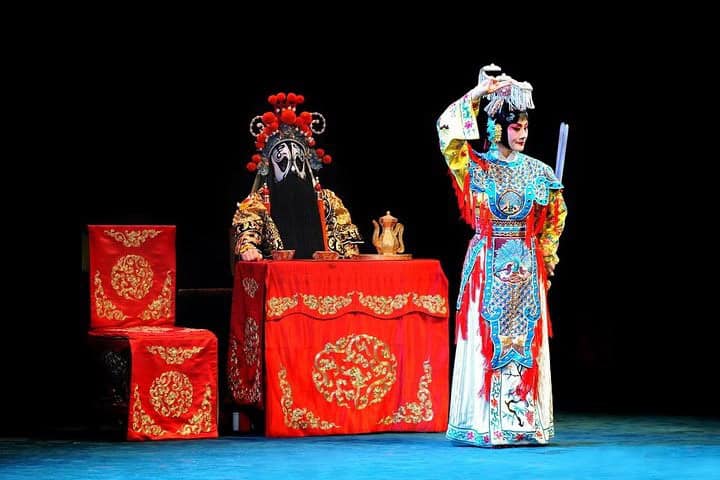
Hu Village
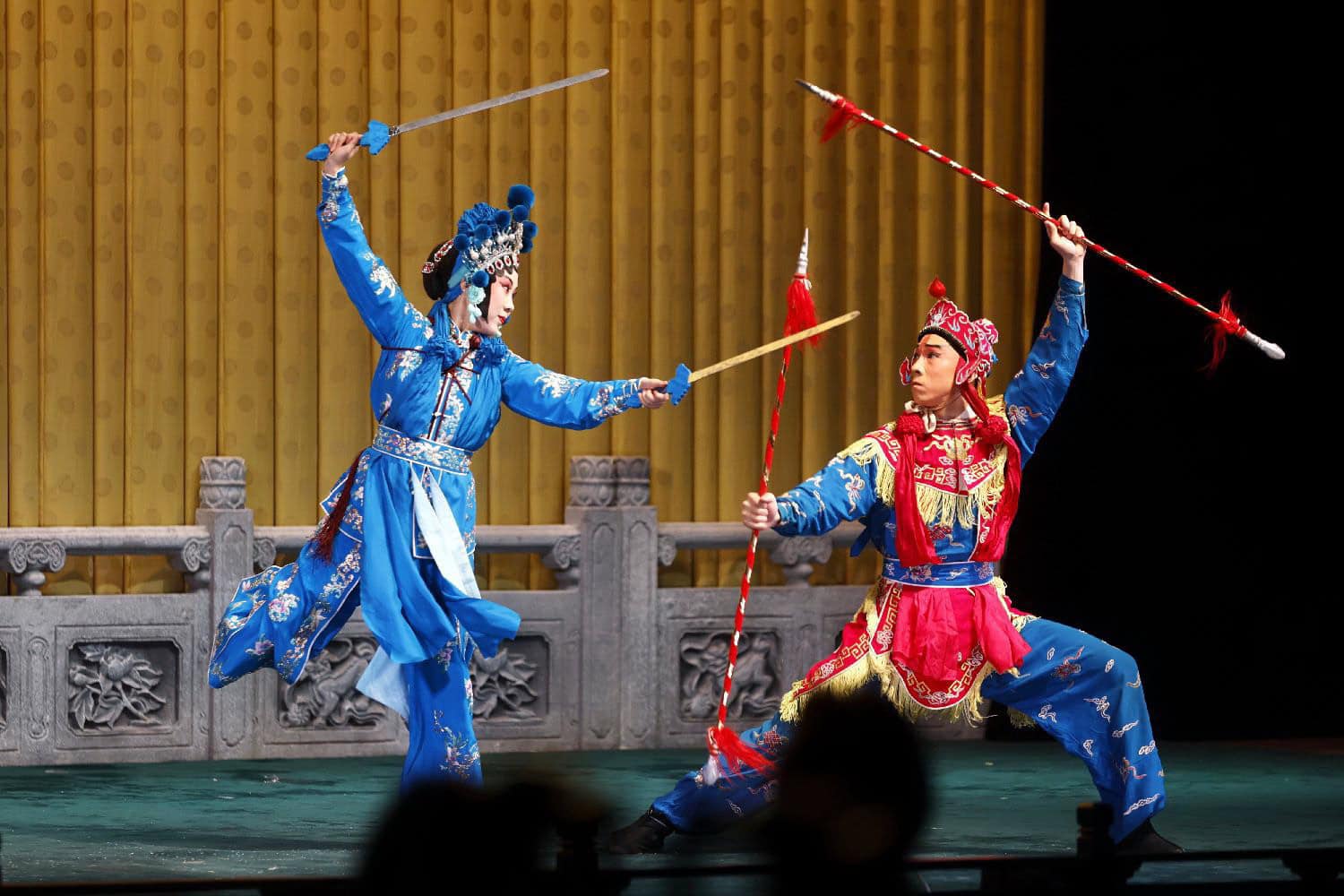
Hu Village, also known as Hu Sanniang, is an independent martial arts play based on the classical novel Water Margin. It can be divided into three segments: “Confronting the Enemy,” “Capturing the Tiger,” and “Captured.” The story tells of the Zhu family village allying with Hu village against the Liangshan Marsh outlaws. Zhu Biao’s fiancée, the formidable warrior Hu Sanniang, engages in fierce combat with the Liangshan heroes and captures Wang Ying, the Dwarf Tiger. Song Jiang changes his strategy, ordering his generals to take turns in battle, and Hu Sanniang is eventually captured by Lin Chong, the Leopard Head. Hu Sanniang is portrayed by a martial female role, requiring equal emphasis on singing, recitation, acting, and combat skills, with demanding arias and difficult movements integrated into the spectacular fight sequences.
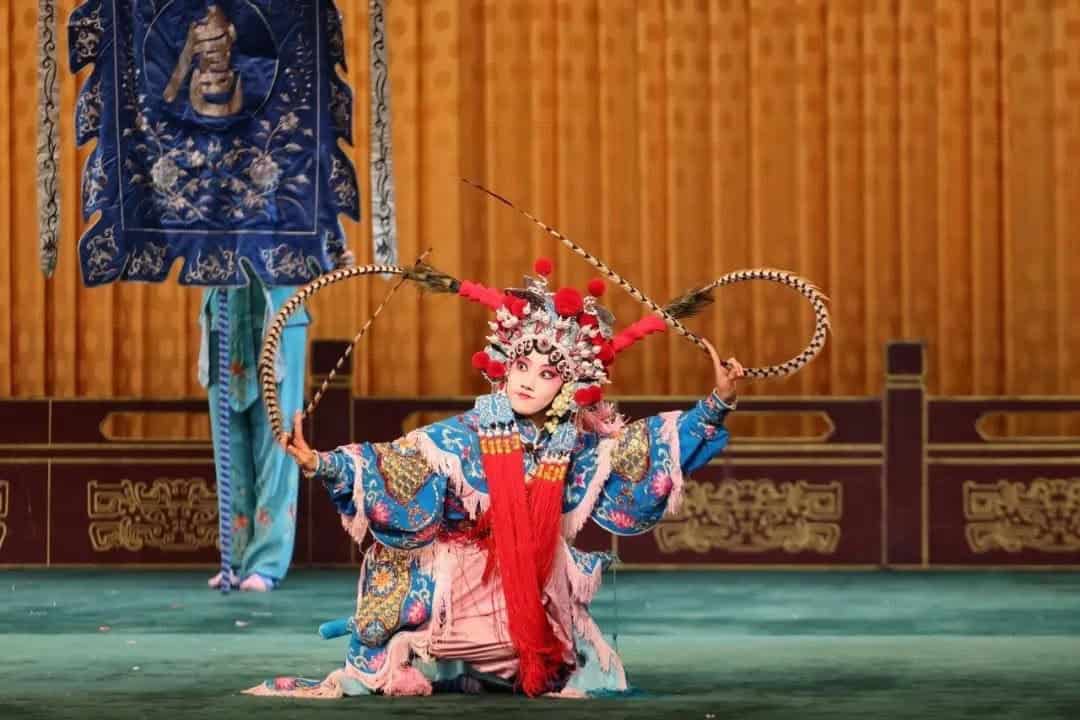
Stealing the Immortal Herb
On Mount Emei, there are two snake spirits, one white and one green, who grow weary of their solitary cultivation in the deep mountains. They transform into the maidens Bai Suzhen and Xiaoqing and wander to West Lake, where they happen upon Xu Xian. Bai Suzhen and Xu Xian develop mutual affection and, after many trials, eventually marry, only to later be torn apart by the monk Fahai. Stealing the Immortal Herb is taken from one episode of this story. During the Dragon Boat Festival, Xu Xian brings realgar wine home to drink with Bai Suzhen. Unable to refuse his persistence, Bai Suzhen drinks and, intoxicated, reverts to her snake form. Xu Xian, shocked to see Bai Suzhen in her true form, dies of fright. Bai Suzhen travels in person to the Kunlun Mountains to seek the immortal herb, which is guarded by two celestial youths. Driven by her desperate desire to save her husband, she fights the guardians and eventually obtains the herb after much struggle.
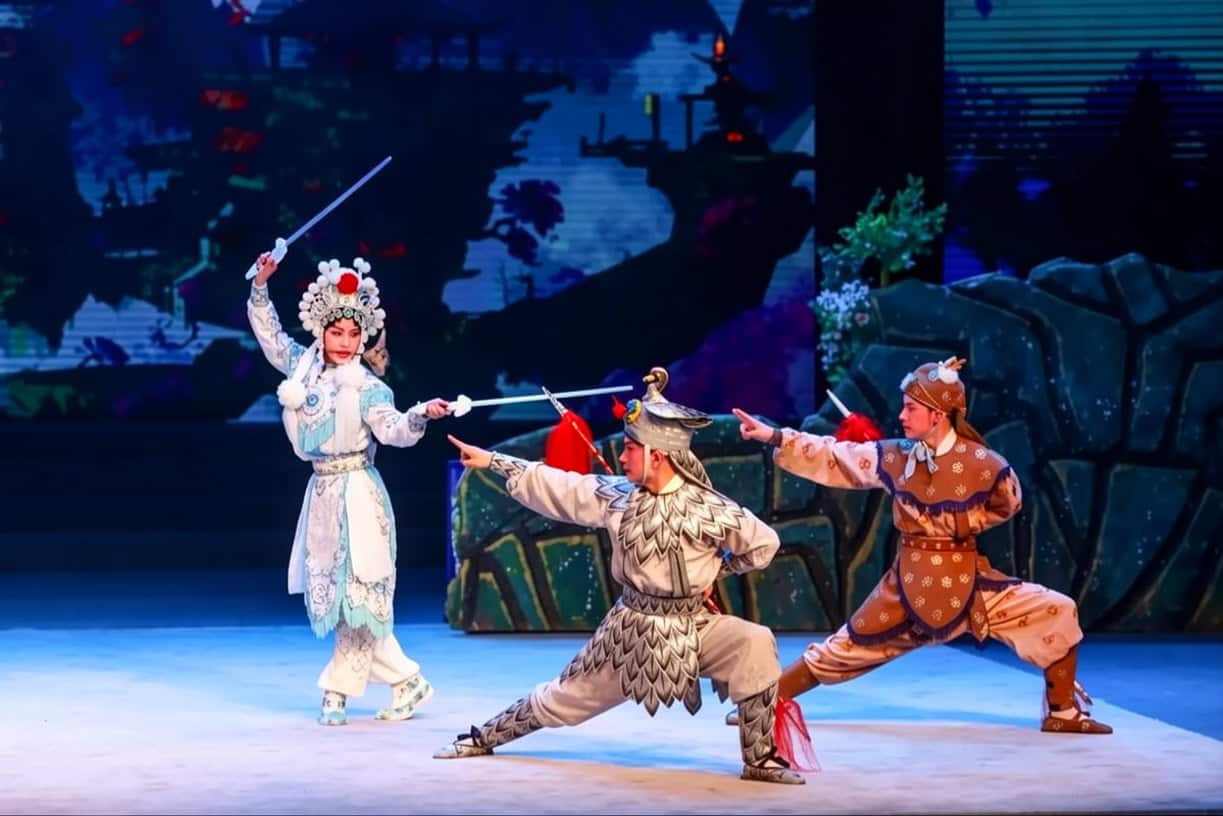
Flooding the Golden Mountain Temple
Flooding the Golden Mountain is an episode from the Legend of the White Snake. At Jinshan Temple, the monk Fahai notices an eerie aura around Xu Xian and refuses to let him leave the mountain. Fahai hides Xu Xian behind the temple’s Buddhist altar. Bai Suzhen, accompanied by Xiaoqing, arrives at Jinshan Temple and pleads with Fahai to release Xu Xian. Fahai refuses, enraging the White Snake. She summons Xiaoqing and leads an army of shrimp soldiers and crab generals to flood the Golden Mountain. Fahai in turn summons heavenly troops. Bai Suzhen, weakened by pregnancy, ultimately retreats in defeat.
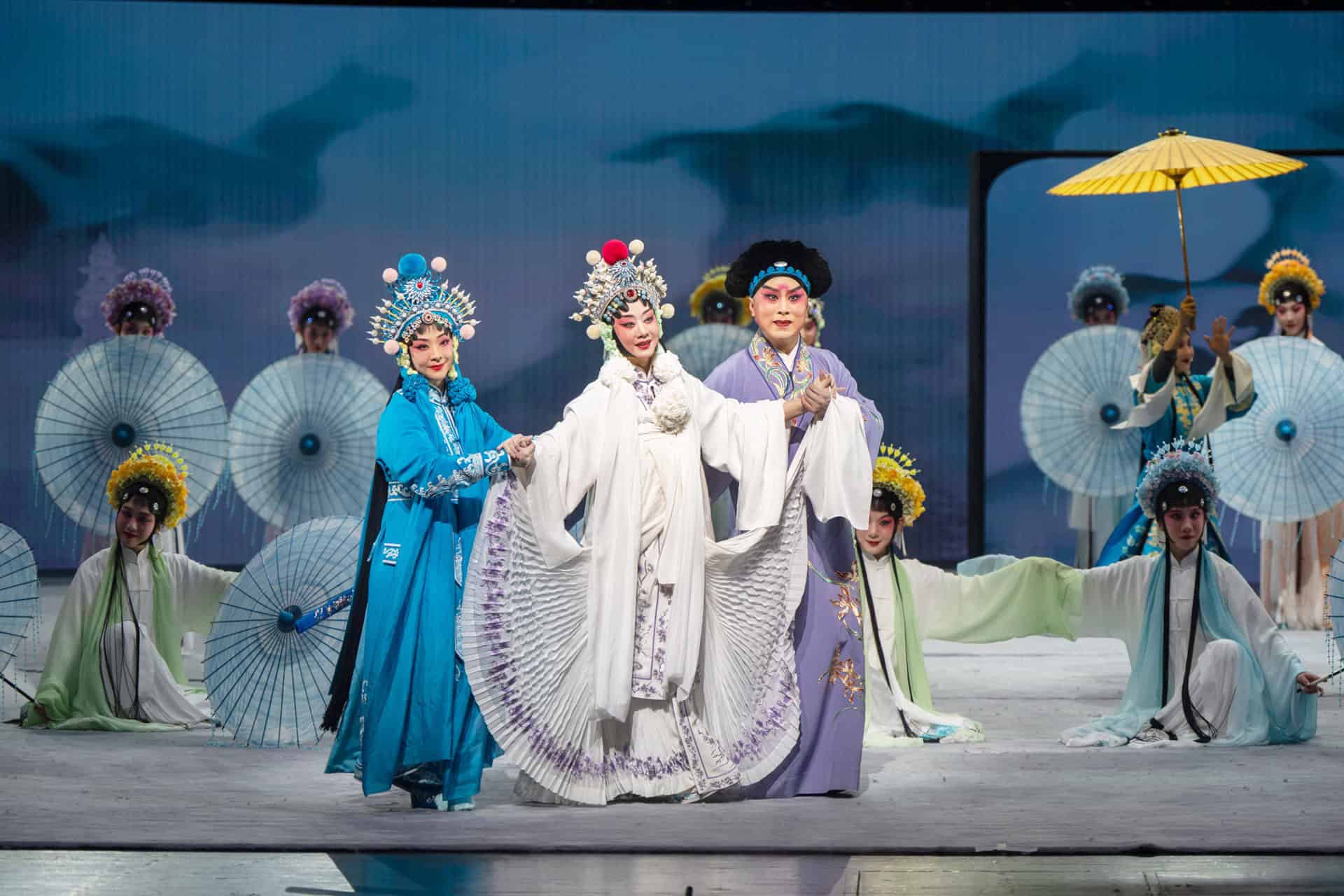
Stealing the Treasury Silver
A fairy transformed from a snake spirit, in order to fulfill the happiness of her close friend, uses her magical powers to break into the official treasury, stealing boundless wealth and fighting off the officials who try to stop her. All the flashing swords and shadows are filled with mystery and dazzling movement. This is not only a display of the performers’ extraordinary martial skills but also embodies the profound essence and spirit of Eastern cultural tradition.
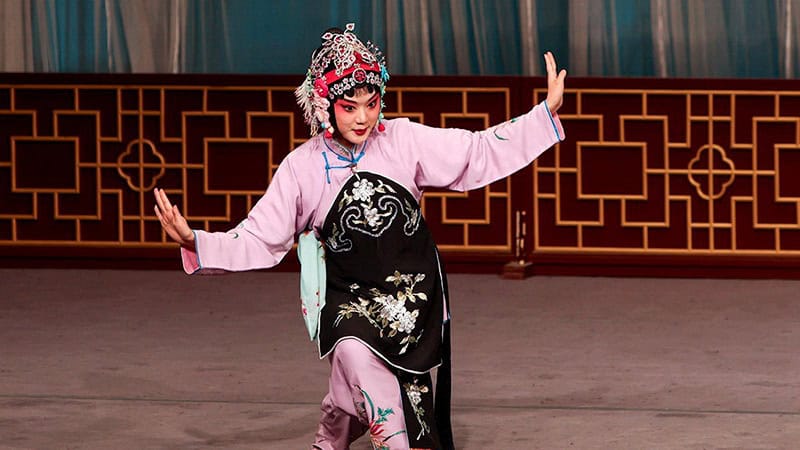
Picking Up the Jade Bracelet
During the Ming Dynasty, a young maiden named Sun Yujiao sits embroidering in front of her home in Sun Family Village, Shaanxi Province. She is noticed by Fu Peng, a young hereditary military commander, who admires her. Pretending to buy a chicken, Fu Peng strikes up a conversation with Sun Yujiao. Fu Peng’s charm and elegance also move Sun Yujiao’s heart. Fu Peng intentionally drops a jade bracelet at her doorstep, and she shyly picks it up, indicating her acceptance of his affection. The matchmaker Liu observes both their feelings and steps in to arrange the match, bringing this comedy to a happy conclusion.
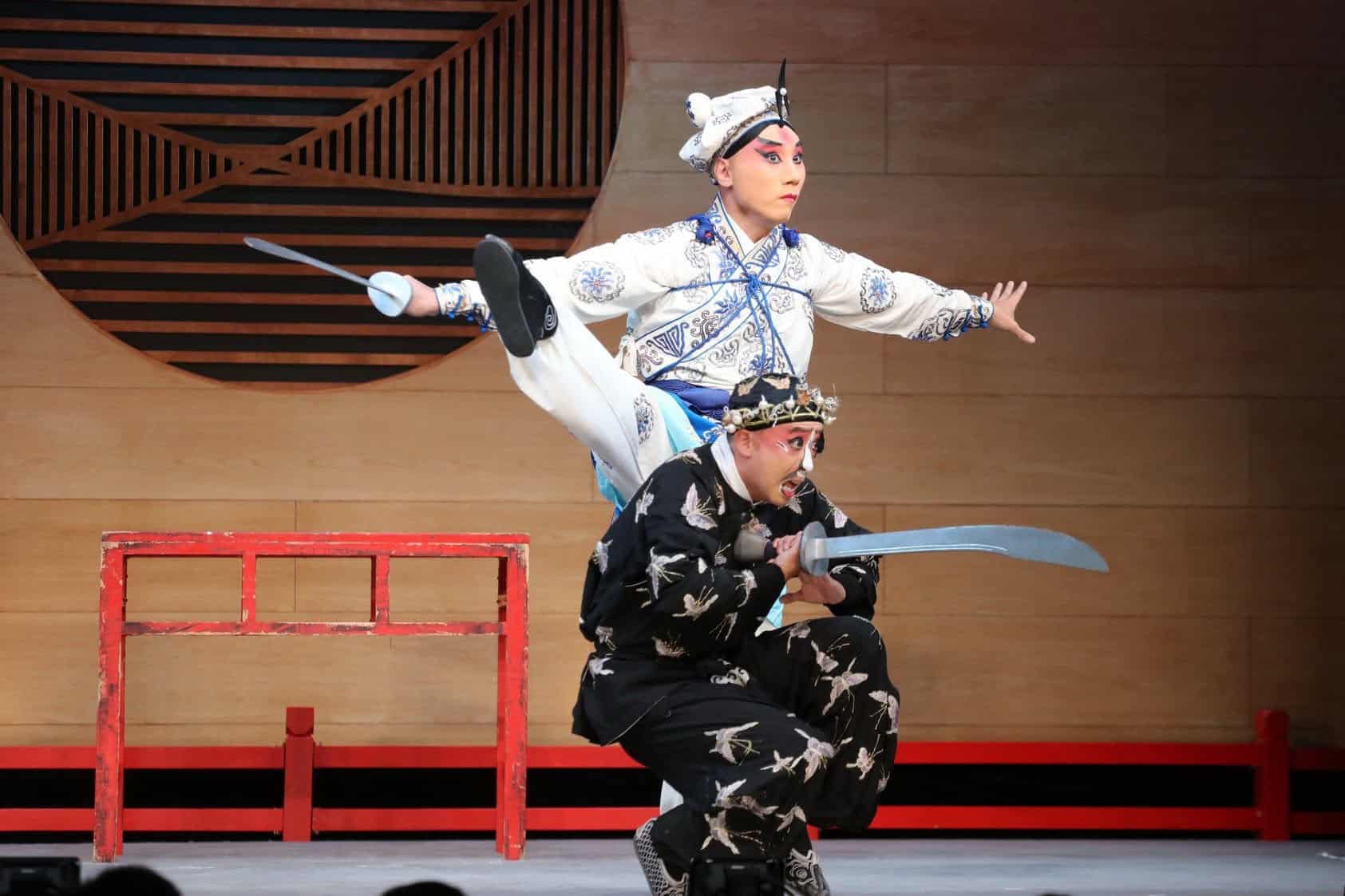
The Crossroads
Jiao Zan causes trouble at the Wufeng Tower, and the Song Emperor, enraged, exiles him to a desert island. Yang Yanzhao, fearing mishaps along the way, sends Ren Tanghui to secretly protect him. Traveling to the crossroads, Jiao Zan stays at a roadside inn run by Liu Lihua, which is actually a den of thieves. Ren Tanghui arrives and also stays at the same inn. In the middle of the night, Liu Lihua comes to kill Ren Tanghui. Ren Tanghui, anticipating the attack, engages in a blind struggle with Liu Lihua in the darkness. Jiao Zan, learning of the situation, joins the fight, and together they finally kill Liu Lihua and his wife. This play portrays a fight between heroes arising from a misunderstanding. All the “martial arts” take place in the darkness of night, yet the stage is brightly lit—this is one of the most enchanting expressive techniques of Peking opera.
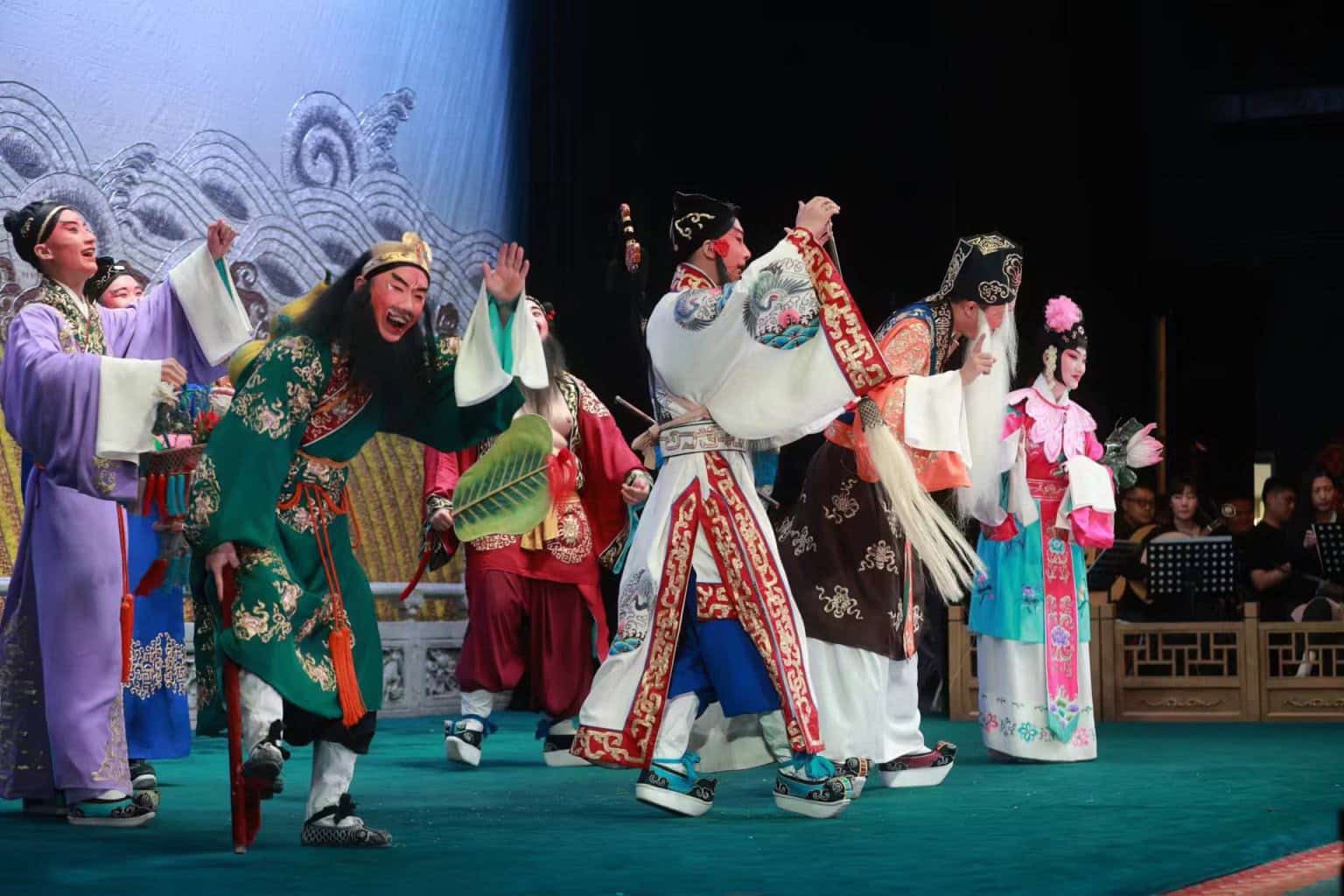
The Eight Immortals Cross the Sea
At the birthday banquet of the Queen Mother of the West, Lu Dongbin and the other Seven Immortals attend the Peach Banquet, drinking heartily and becoming deeply intoxicated. As they journey across the East Sea, each uses their treasures to cross the sea, stirring up the waters and causing the underwater palace to shake violently. The Golden Fish Fairy, enraged, confronts the Eight Immortals. Recognizing their wrongdoing, the Immortals pretend to be drunk and engage in battle with the Golden Fish Fairy, but are defeated. They apologize to the Golden Fish Fairy, and the two sides reconcile, allowing the Eight Immortals to finally cross the sea.
The Rainbow Bridge Gifts a Pearl
This play is a mythological tale. The Celestial Maiden of Sizhou City deeply admires the literary talent of Bai Yong. One day, they meet at the Rainbow Bridge, fall in love, and become a couple. The Celestial Maiden gifts Bai Yong a precious pearl as a token of their commitment. Erlang Shen, leading heavenly troops including Jia Lan and Nezha, comes to capture her. The Celestial Maiden leads her aquatic forces to defeat Erlang Shen and finally unites with Bai Yong.
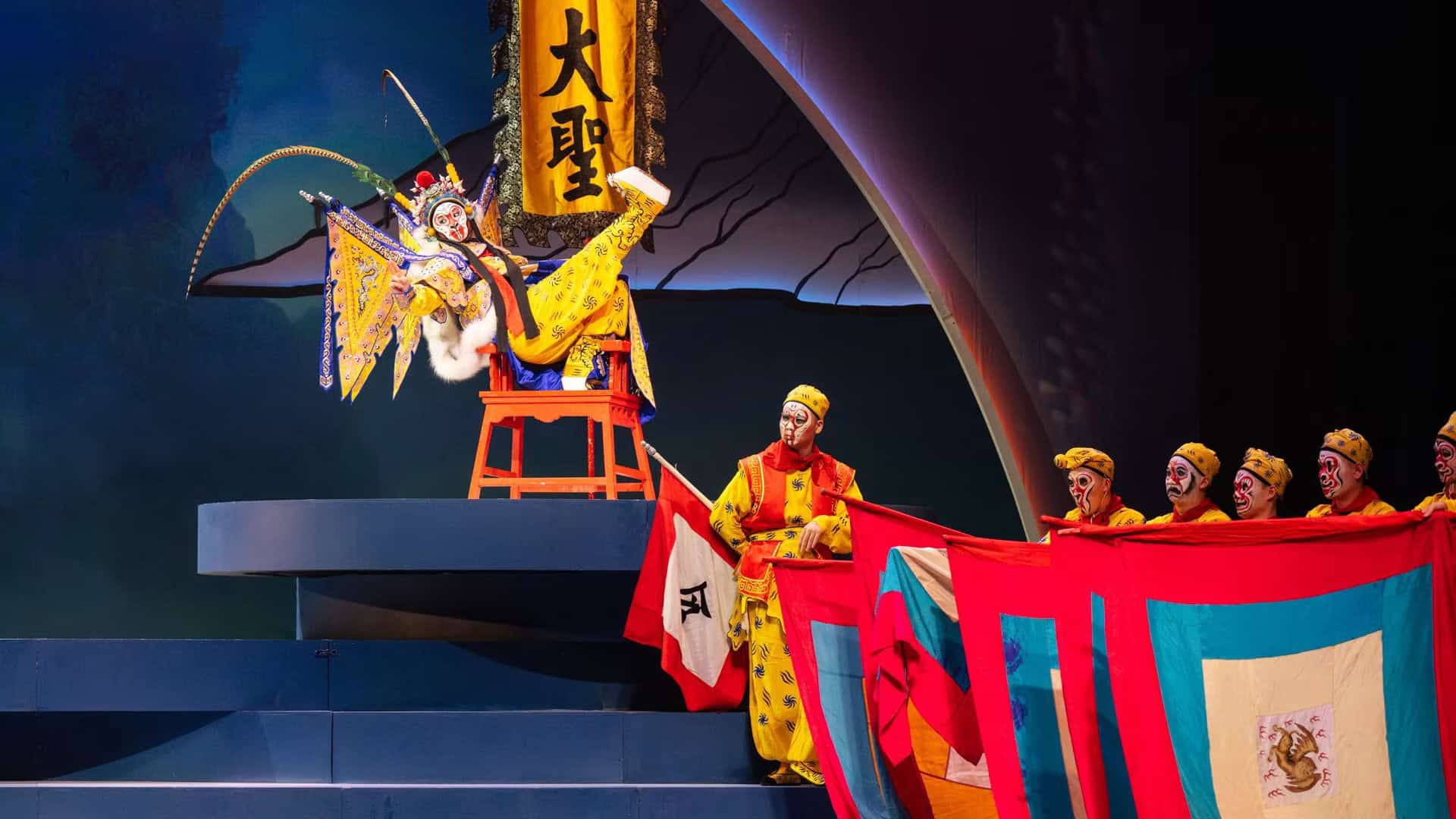
The Monkey King Wreaks Havoc in the Dragon Palace
This play is adapted from the Chinese classical masterpiece Journey to the West. The Monkey King Sun Wukong, having gathered his forces at the Mountain of Flowers and Fruit, descends to the Dragon Palace to demand a weapon from the Dragon King. He obtains the “Dinghai Shenzhen” (the Golden Cudgel) and wreaks havoc in the Dragon Palace.
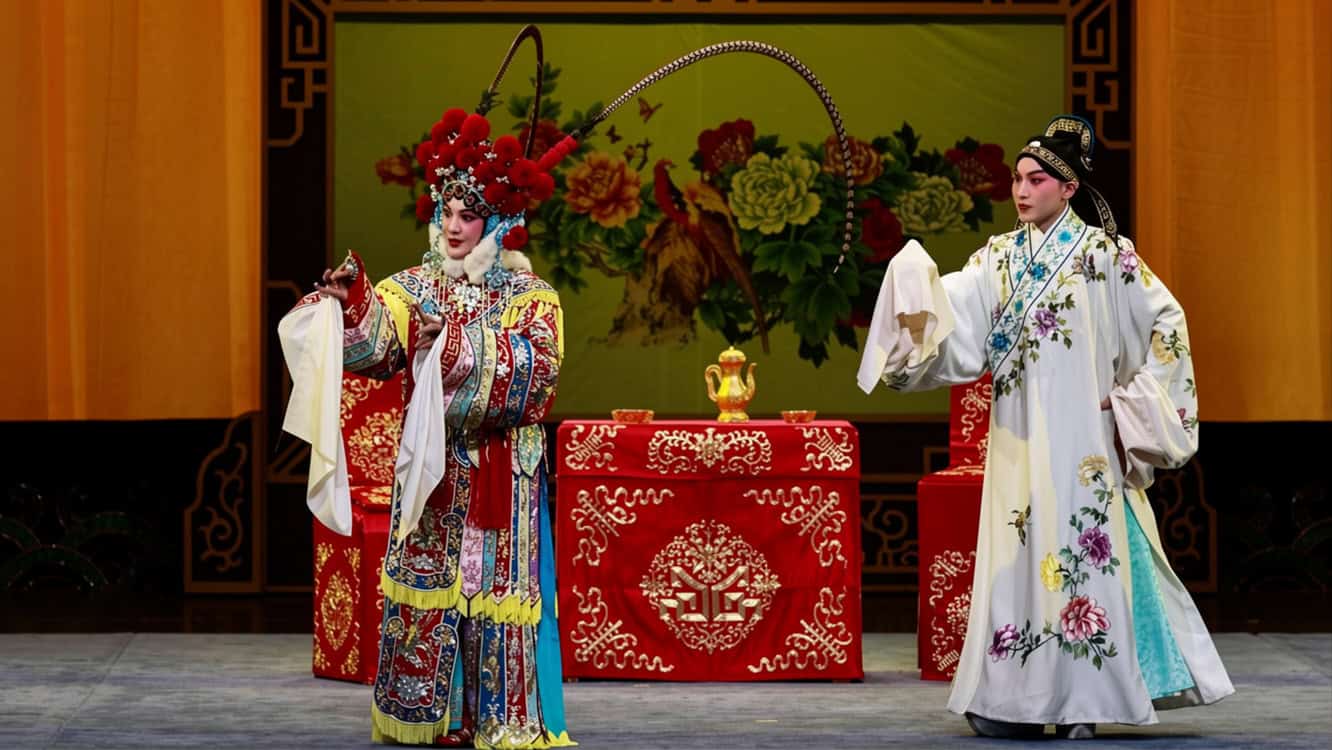
Blocking the Horse
During the Northern Song Dynasty, Yang Bajie, under the orders of Grand Matriarch She, disguises herself as a man and infiltrates the Liao Kingdom to gather military intelligence. On her return journey, she is stopped by Jiao Guangpu, who invites her into his tavern. Jiao was originally a Song general who, after being captured, ended up in Liao territory, running a tavern to make a living. He longs to return to his homeland but has no way to cross the border. Seeing that Yang has a military pass, he attempts to steal it. Yang, suspicious of Jiao, engages him in combat. Jiao, suspecting Yang is not a Liao officer, probes her and she reveals the truth. Jiao disguises himself as Yang’s groom, and the two return together to their homeland.